

As the United States approaches its 250th anniversary, few art forms tell the American story as clearly and powerfully as jazz. Born from African American communities in port cities like New Orleans and Charleston, jazz emerged from the blending of African rhythms, European harmony, blues, spirituals, and lived experience into something entirely new. It is often called America’s original art form—not only because of where it began, but because of what it represents: freedom of expression, individual voice within a collective, and the creative power of cultural exchange.
Jazz is built on improvisation, listening, and dialogue. Musicians respond to one another in real time, finding unity without erasing individuality. In this way, jazz mirrors democracy itself—imperfect, evolving, and dependent on collaboration and trust. At the same time, jazz tells an honest story of America’s struggles and triumphs, particularly the resilience and brilliance of Black Americans who created innovation and beauty in the face of injustice.
For more than a century, jazz has evolved alongside the nation—absorbing new influences, responding to social change, and traveling the world as a symbol of American creativity and possibility. In 1987, the U.S. Congress formally recognized jazz as a “national treasure,” affirming its cultural and artistic significance. Yet jazz is not a museum piece. It remains a living, breathing art form shaped by each new generation of musicians.
Jazz, Charleston, and the American Story
Each year, the Charleston Jazz Festival celebrates jazz not as a single sound or style, but as a living tradition shaped by migration, cultural exchange, and community.
By presenting artists whose work reflects the interconnected roots of jazz, the Festival draws clear lines between past and present, local and global. This year’s programming features internationally acclaimed artists such as Danilo Pérez, Herlin Riley, Al Di Meola, and Alfredo Rodríguez alongside Charleston’s own vibrant jazz community, including the Gullah Collective and the Charleston Jazz Orchestra.
When artists like Herlin Riley share the stage with the Gullah Collective, audiences can hear the rhythmic and cultural connections between Charleston and New Orleans—two cities central to the origins of jazz. These performances illuminate how African, Caribbean, and African American musical traditions flowed through port cities like Charleston, shaping the early sound and spirit of jazz.
The Festival also highlights the depth of artistry within Charleston itself. Performances such as Ann Caldwell and Loosfitt Jazz Ensemble, Jazz Messengers: A Tribute to Art Blakey led by Abdiel Iriarte, Alva Anderson’s tribute to Nina Simone, and the College of Charleston Faculty Jazz Ensemble showcase the city’s dynamic and evolving jazz scene. Local artists perform alongside international headliners, reinforcing the idea that jazz flourishes when global influence and local tradition are in dialogue.
Education, Legacy, and the Future of Jazz
Charleston’s role in early jazz history is powerfully embodied by the Jenkins Orphanage Band—one of the nation’s earliest and most influential jazz ensembles. Their legacy, grounded in education, opportunity, and community investment, continues to inform the mission of Charleston Jazz today.
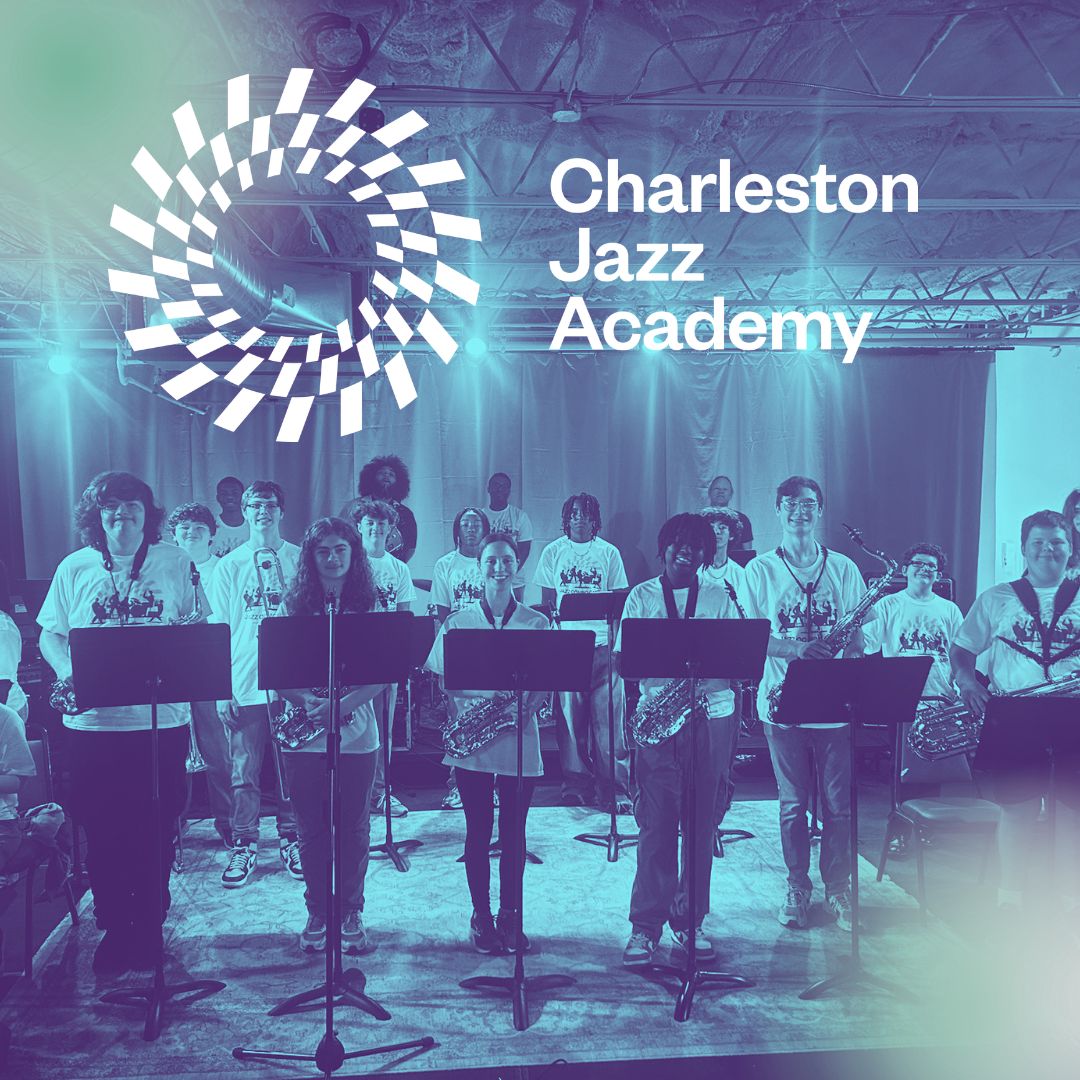
That spirit lives on through the Charleston Jazz Academy, which reflects Reverend Daniel Jenkins’ vision of access and excellence in music education. During the Festival, Academy students perform, participate in masterclasses with visiting artists, and experience jazz not as distant history, but as a living art form they are actively shaping.
Our educational initiatives extend far beyond the stage. Festival artists lead masterclasses for students and the public, and partnerships such as Lowcountry Jazz Girls Day with the University of South Carolina help ensure that the next generation of jazz musicians reflects the diversity, creativity, and vibrancy of our community.
Through conversations, panels, and interactive programs, we create space for audiences to engage with artists beyond performance alone—deepening connection and understanding.
As part of Jazz Is Community, an initiative in partnership with Spoleto Festival USA, we are presenting the Herlin Riley Quartet in both concert and educational settings designed to engage students, educators, and local musicians directly. These programs include an in-school performance, a public masterclass at the Charleston Jazz Academy, and a culminating panel discussion and performance, Rhythm and Flow, at the close of the Festival.
Jazz has always flourished in communal spaces—clubs, neighborhoods, schools, and places of worship. The Charleston Jazz Festival honors that tradition by creating environments where listening, learning, and shared experience unfold side by side.
A Festival Rooted in Place, Reaching the World
Visiting artists often speak of Charleston with reverence, recognizing its unique place in American music history. The city’s Gullah Geechee traditions, port city history, and cultural lineage offer a powerful cultural backdrop for jazz performance and exchange.
By intentionally weaving local heritage with national and international artistry, the Charleston Jazz Festival feels both authentically Charleston and globally resonant—rooted in place, yet expansive in reach.
What We Hope Audiences Experience
Above all, we hope audiences leave inspired and more deeply connected—to the music, to one another, and to Charleston’s living cultural legacy. The Festival invites listeners to experience jazz as a shared language that tells stories of resilience, innovation, and community across generations.
As America marks 250 years, jazz reminds us that our national identity is shaped not only by where we have been, but by our ongoing capacity for creativity, collaboration, and shared expression.
The Charleston Jazz Festival is made possible in part by the Medical University of South Carolina, South Arts, SC Arts Commission, the National Endowment for the Arts, and the Oliver S & Jennie R Donaldson Charitable Trust and Hilton C. Smith Jr.